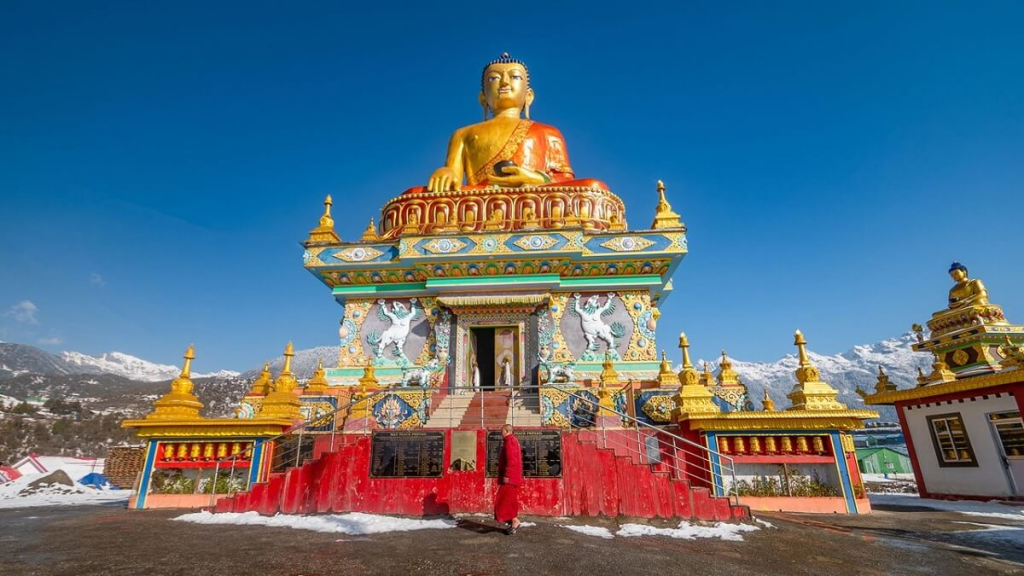
Nestled in the farthest corner of India’s Northeast, Arunachal Pradesh remains one of the most raw and untouched travel destinations in the country. This is a land where clouds roll over silent valleys, Buddhist chants echo across snowy passes, and ancient tribal cultures live in deep harmony with nature.
Unlike the tourist-heavy hill stations of North India, Arunachal offers something purer—a kind of quiet magic. Let’s dive deep into ten handpicked destinations, seen through a travel writer’s eyes, that will make you fall in love with this state.
1. Tawang – Monasteries in the Clouds
As you begin the climb toward Tawang, the landscapes change dramatically. Snow-laced peaks loom ahead, prayer flags flutter wildly in the wind, and sharp mountain air fills your lungs. The town itself is home to the Tawang Monastery, the second-largest in the world, where monks still rise at dawn to light butter lamps.
Stand atop Sela Pass, where the sky feels closer than the earth, and you’ll understand why many travelers feel something spiritual about this place.
Why Go: Buddhism, border history, snow-covered landscapes
Best Time: March to October
2. Ziro Valley – A Living Canvas of Tribal Life
Imagine waking up to a valley painted in mist, with patchwork rice fields stretching out under pine-covered hills. Ziro is not just scenic—it’s soulful. The Apatani tribe, known for their sustainable way of life, live in bamboo huts and grow rice and fish together in their paddy fields.
If you visit during the Ziro Music Festival in September, the whole valley transforms into a stage under the open sky.
Why Go: Tribal experiences, natural beauty, music festival
Best Time: March to May, September
3. Dirang – Where Hot Springs and Monks Await
Dirang is often passed over by tourists rushing to Tawang, but that’s a mistake. This peaceful valley town surprises you with its charm—natural hot springs, ancient stone houses in the Dirang Dzong, and friendly Brokpa locals herding yaks in traditional attire.
A short ride away lies Sangti Valley, where black-necked cranes migrate in winter. It’s a photographer’s dream.
Why Go: Birdwatching, scenic valley, local life
Best Time: March to July
4. Bomdila – Misty Mountains and Monastic Peace
Set against a panoramic backdrop of Himalayan ranges, Bomdila is a perfect stopover if you seek solitude. The Bomdila Monastery, with its giant Buddha statue, offers sweeping views and a place to just breathe.
Apple orchards dot the slopes, and in the market, you’ll find exquisite hand-woven woolens sold by Monpa women.
Why Go: Hill views, monasteries, peaceful vibe
Best Time: April to October
5. Mechuka – The Hidden Valley No One Talks About
It takes time to reach Mechuka, but those who make the journey are richly rewarded. Wooden homes with painted shutters, horses grazing in the open fields, and the glimmering Siyom River create a postcard-perfect scene.
This high-altitude valley near the Indo-China border is home to the Memba tribe and ancient Buddhist monasteries that seem carved out of the cliffs.
Why Go: Remote beauty, tribal cultures, spiritual retreat
Best Time: October to March
6. Roing – Lakes, Legends, and Lost Forts
Roing, in the Lower Dibang Valley, combines mystery and natural beauty. You can spend a quiet afternoon by Sally Lake, or trek to the ruins of Bhismaknagar Fort, believed to be linked to ancient Mahabharata legends.
Dense forests surround the town, and the nearby Mehao Wildlife Sanctuary is a rich ecosystem teeming with wildlife and orchids.
Why Go: Archaeology, lakes, lush green trails
Best Time: October to April
7. Pasighat – River Adventures and Tribal Celebrations
Often called the “Gateway to Arunachal Pradesh,” Pasighat is ideal for adventure-seekers. Here, the Siang River (a tributary of the Brahmaputra) offers excellent white-water rafting and mesmerizing sunrise views.
The Adi tribe, known for their vibrant festivals, welcomes visitors with open arms. You can witness the rhythm of rural life as you cross hanging bridges over the river.
Why Go: Rafting, tribal culture, scenic views
Best Time: November to March
8. Anini – Where Silence Rules the Mountains
Tucked away in the Dibang Valley, Anini is one of India’s most remote and serene destinations. It’s often snow-covered and cut off in winter, but when it opens up, it feels like a world lost in time.
Surrounded by tall pine forests and icy peaks, it’s the perfect place to disconnect. The Mishmi tribe, one of India’s least-known communities, still follows age-old customs here.
Why Go: Seclusion, snow, culture
Best Time: October to March
9. Namdapha National Park – Into the Wild
At the southeastern tip of Arunachal lies Namdapha, a massive national park that shelters everything from red pandas and clouded leopards to hundreds of bird species.
Unlike tamed wildlife parks, Namdapha feels raw and unpredictable. Trekking here is not just about spotting animals—it’s about rediscovering your wild side.
Why Go: Jungle treks, biodiversity, rare wildlife
Best Time: November to March
10. Itanagar – Culture at the Capital
Though often just a transit point, Itanagar has its own attractions. The historic Ita Fort, built from stone bricks centuries ago, gives the city its name. Don’t miss the Jawaharlal Nehru State Museum for insight into the state’s tribal traditions.
Nearby, Ganga Lake (Gyakar Sinyi) offers a quiet break in nature.
Why Go: Urban comforts, history, tribal artifacts
Best Time: October to April
Arunachal Pradesh is not a place you “do” in a few days. It’s a region to slow down, sink in, and let nature teach you a few things. Whether you’re following Buddhist trails in Tawang or sipping millet beer in Ziro, the land rewards you with stories, silence, and soul.
So the next time you’re planning a holiday beyond the obvious—choose Arunachal, before the rest of the world catches on.
 TRAVELZILLA