When we think of travel, we often imagine sightseeing, luxury hotels, or ticking items off a bucket list. But what if the most memorable part of your journey wasn’t a tourist attraction, but the smell of homemade curry simmering in a clay pot, or the gentle laugh of an elderly woman teaching you how to grind spices with a mortar and pestle?
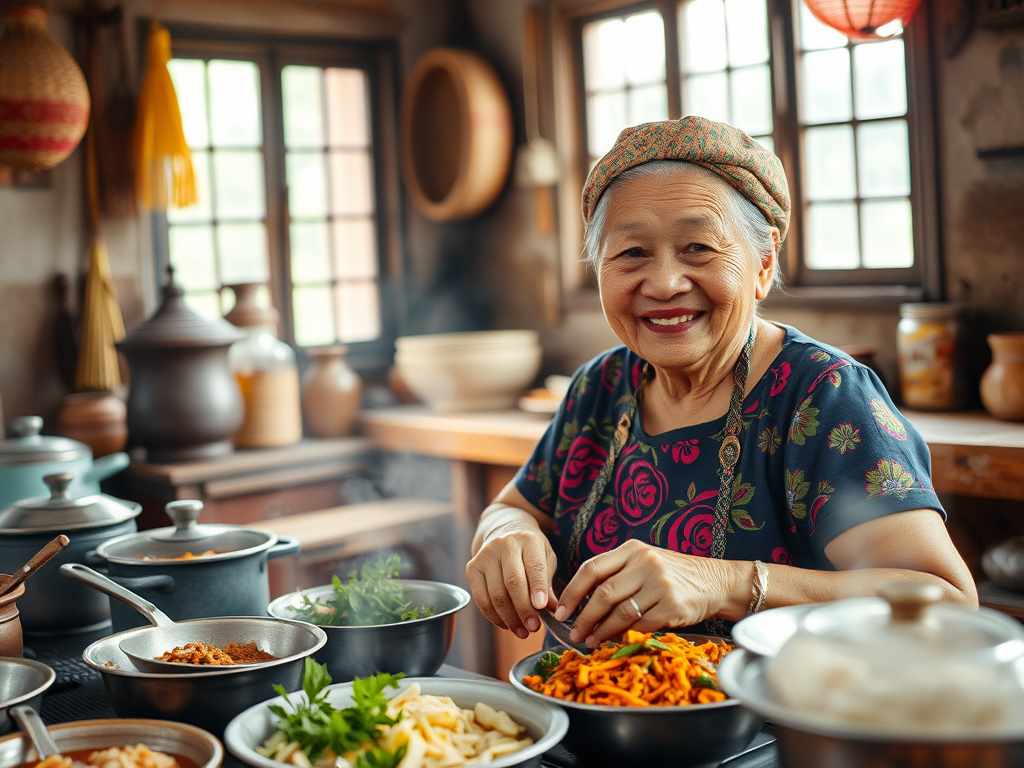
That’s what I discovered on a recent trip to Malaysia, where I signed up for an experience called “Cooking with Grandma.” It was more than a cooking class — it was a cultural immersion that connected me to the roots of Malaysian heritage, hospitality, and home-cooked tradition.
The Hidden Joys of Kampung Life
Our experience began in a quiet kampung (village) just outside of Melaka. The town is known for its rich Peranakan culture — a unique blend of Chinese and Malay traditions — and its warm, community-driven lifestyle. After a short drive from the city center, we arrived at a charming wooden house surrounded by banana trees, with the scent of pandan leaves wafting in the air.
Waiting at the front porch was Mamu Zahara, a sprightly 70-year-old woman in a batik dress with hands as skilled as they were kind. She welcomed us with open arms and a broad smile, speaking in a mix of Bahasa Malaysia and broken English, helped by her daughter who occasionally translated.
But words didn’t matter much. In the kitchen, everyone speaks the same language — the language of food.
A Kitchen Built on Heritage
Unlike a modern kitchen, Zahara’s workspace was an open, airy area with traditional clay stoves, wooden utensils, and stacks of fresh herbs picked just that morning. There were no blenders or timers, no fancy cookware. Everything was done by hand and by feel, just the way it has been done for generations.
We started by grinding dried chilies, lemongrass, garlic, and shallots in a granite mortar and pestle — a process that was tiring but deeply satisfying. As I worked, Zahara gently corrected my technique, showing me how to swirl the pestle in a circular motion instead of pounding straight down. “Slow, like this. No rush. Food needs love,” she said.
She then reached into a basket and pulled out a handful of belacan — a fermented shrimp paste that is a staple in Malaysian cuisine. Its pungent aroma caught me off guard, but she assured me it would mellow in the dish. True enough, when added to the sizzling sambal on the stove, it brought out an incredible depth of flavor.
Cooking is Storytelling
As we cooked, Zahara shared stories about her childhood. She told us how during festivals, the entire village would gather in one home to prepare food together. There were no written recipes, only memory and experience passed down through generations.
She laughed as she recalled sneaking spoonfuls of sweet coconut filling before the kuih (Malaysian desserts) were steamed. Her eyes lit up when she described the first time her mother let her make rendang, a slow-cooked beef dish, for Hari Raya.
This wasn’t just a cooking class. It was a portal into the past, where family, culture, and food were inseparable.
A Meal Shared with Strangers Turned Friends
After hours of preparation, we sat down on floor mats to enjoy the dishes we had cooked together — ayam masak merah (red chili chicken), sambal belacan, ulam (a type of herb salad), and a creamy coconut dessert wrapped in banana leaves. Everything was rich in flavor, texture, and love.
What made it more special was the setting. We weren’t at a restaurant or a resort. We were in Zahara’s home, eating food she had grown, prepared, and shared with us. Her daughter joined us, and soon we were laughing, asking questions, and comparing life in India, Malaysia, and other countries. For a moment, there were no borders — just people enjoying a meal, learning from each other.
Why This Experience Matters
In an era where travel is often about checking into five-star hotels or snapping the perfect Instagram photo, experiences like cooking with a local grandma offer something deeper. They remind us that the heart of travel lies in connection — with people, culture, and history.
Malaysian cuisine is incredibly diverse, shaped by centuries of trade, migration, and multicultural living. Learning how to cook it from someone who has lived through this evolution adds layers of understanding that no guidebook or cooking show can provide.
It’s also an excellent way for families and children to engage in learning. The process of shopping for ingredients in a village market, preparing meals from scratch, and listening to local stories helps travelers appreciate the traditions that sustain a community.
Tips for Booking a Local Cooking Experience in Malaysia
If you’re interested in joining a similar experience, here are a few tips:
- Choose a local host: Many rural communities across Malaysia now offer homestays and cooking experiences. Look for programs run by local women or families for the most authentic touch.
- Book through reliable platforms: Websites like Airbnb Experiences, Backstreet Academy, or local tour operators often list these cultural experiences. Read reviews and look for hosts who share their personal stories.
- Be respectful: You are entering someone’s home. Dress modestly, be patient, and treat the space with care.
- Ask questions: Hosts love it when guests are curious. Ask about ingredients, cooking methods, and the origin of dishes.
- Share your culture too: Many hosts enjoy learning about Indian traditions, food, and festivals. It makes the exchange more enriching.
Final Thoughts
Travel is more than movement; it’s about understanding. Cooking with Grandma Zahara in Malaysia was a reminder of the power of simple things — a shared meal, a kind smile, a forgotten recipe — to build bridges across cultures.
As tourism continues to evolve, we must seek out experiences that allow us to connect meaningfully with the places we visit. For families looking to do something different this summer, skip the usual sightseeing schedule. Instead, spend a day in a village kitchen, learning to cook from someone who has been doing it for decades.
Because in the end, the best souvenirs aren’t things — they’re memories made in the warmth of a stranger’s home, over a pot of bubbling curry.
 TRAVELZILLA