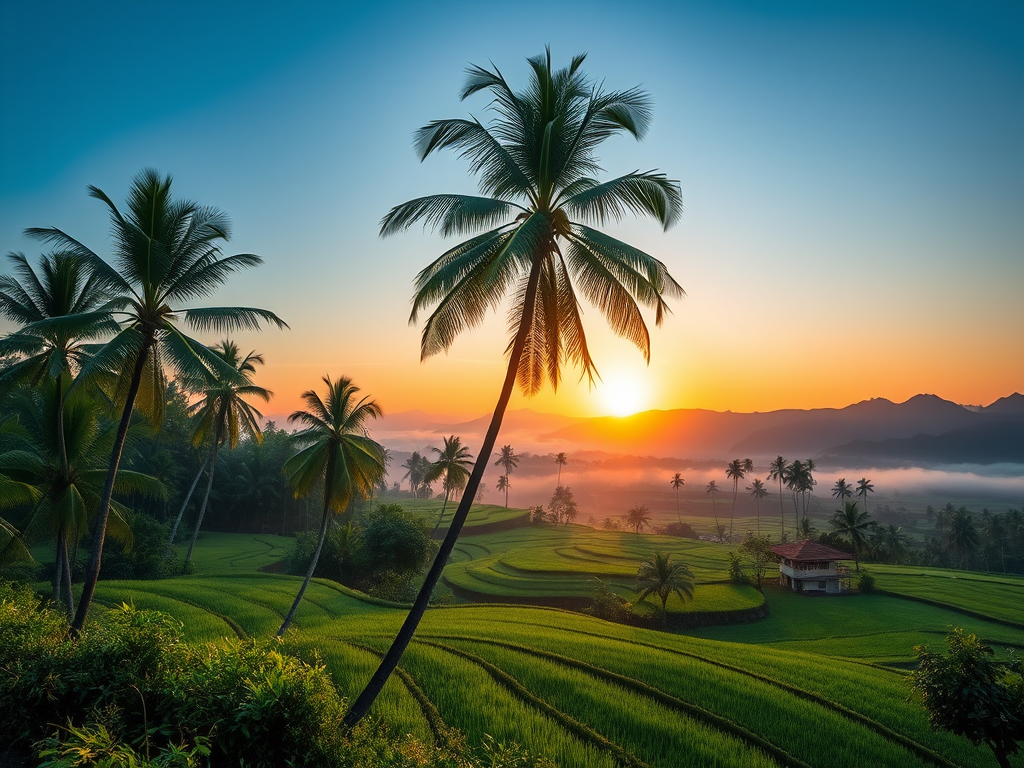
When most people think of Bali, they picture beach clubs, infinity pools, and surf waves. But on my recent trip, I decided to experience something completely different — a full day in a traditional Balinese village. And what I found was the real soul of Bali — calm, deeply rooted in tradition, and full of life’s simplest joys.
This is a glimpse into one of the most memorable days of my travels.
The Wake-Up Call: Roosters and Temple Chants
I stayed in a small homestay in the village of Penglipuran, one of the cleanest and most traditional villages in Bali. My room was simple — no air conditioning, no fancy decor — just a bed, a wooden desk, and a large window that opened into the garden.
At 5:30 AM, the village slowly came to life. Birds chirped, roosters crowed, and in the distance, I could hear chants from a nearby temple. It wasn’t annoying or loud — it was peaceful, almost meditative.
My host, Made, greeted me with a warm smile and a cup of Balinese coffee. It was thick, earthy, and unlike any coffee I’d tasted before. Made’s wife, Ketut, served some banana fritters — simple, homemade, and delicious.
Morning Offerings and Prayers
After breakfast, I followed Ketut as she went about her daily rituals. Like most Balinese women, she prepared canang sari — small palm leaf baskets filled with flowers, rice, and incense — to place at the family shrine and entrance gate.
Balinese Hinduism is a huge part of daily life. These offerings are made every single day, sometimes multiple times a day. They are meant to keep balance between good and evil, the seen and the unseen.
What touched me most was how gently and respectfully Ketut placed each offering. There was no rush, no carelessness — only mindfulness. She invited me to make one too. Though I was clumsy, she smiled and said, “It’s not about perfect. It’s about your heart.”
A Walk Through the Village
After the rituals, I took a walk through the village with Made. The streets were spotless, the gardens well-kept, and every house had a similar layout — a front courtyard, a temple, and open pavilions for cooking and family gatherings.
Penglipuran is known for its traditional bamboo architecture and community rules that prevent overdevelopment. There are no big resorts or traffic here. Just rows of beautiful homes and smiling faces.
Children played in the open, old women sat weaving baskets, and the village dogs roamed freely. Everyone greeted me with a gentle “Om Swastiastu” — the Balinese greeting which means peace and well-being.
Midday: Farming and Simplicity
At around 11 AM, Made took me to the nearby farm fields. He owns a small piece of land where he grows vegetables and rice. As we walked along narrow paths between lush green paddies, he explained how rice is more than just food in Bali — it’s sacred. There’s even a rice goddess, Dewi Sri, whom farmers worship before planting.
He handed me a sickle and asked if I’d like to try cutting some grass for the cows. I hesitated, but agreed. It was sweaty work, and I was out of breath in minutes. But he laughed and said, “This is daily gym for us.”
I learned more in that short walk than I could have from any guidebook — about the cycle of farming, the importance of water temples, and how closely tied nature and religion are in Balinese life.
Lunch: Home-Cooked and Heart-Warming
Lunch was back at the homestay. Ketut had prepared nasi campur — a mixed rice dish with vegetables, tempeh, fried peanuts, sambal, and grilled chicken. Everything was cooked on a traditional wood fire stove.
We ate on the floor, with our hands, chatting in a mix of English and hand gestures. It was one of the most genuine meals I’ve ever had — not just because of the taste, but because of the warmth around it.
After lunch, the village seemed to pause. The sun was high, and people took rest. I lay on the bamboo mat in the open pavilion, dozing off to the soft hum of insects and the distant sound of a gamelan instrument being played somewhere.
Afternoon Activities: Weaving and Learning
In the afternoon, I joined a group of village women who were weaving ata grass into baskets. These handwoven items are famous in Bali, especially in Ubud’s markets, but here, I saw how they are actually made.
It requires skill and patience. One woman showed me how to thread the dried grass, slowly twisting and pulling to make the base. It took me 20 minutes to make something that looked nothing like a basket, but the women were encouraging and full of good humor.
Later, a local teacher offered a short session on Balinese script and traditional dance. The kids performed a short piece in the temple courtyard, their eyes wide with concentration, their movements full of grace. I realized how much effort goes into preserving culture here — it’s taught from childhood and lived daily.
Evening: Temple Ceremony and Farewell
As the sun began to set, the whole village seemed to get ready for something special. It was the night of a local temple ceremony — not for tourists, but a real religious event. I was invited to join, wearing a sarong and sash provided by my hosts.
The temple lit up with oil lamps, and the air was thick with incense. Women carried offerings on their heads, men played traditional music, and everyone gathered in colorful attire. It wasn’t a performance. It was worship, celebration, and community all at once.
I sat at the edge, quietly watching. Though I didn’t understand the prayers, I felt something deeply peaceful. Something that made me reflect on how much richer life can be when it’s connected — to people, to culture, to nature, to something bigger than ourselves.
Final Thoughts: More Than a Trip
As I packed up the next morning, I felt emotional. My short stay in the village had taught me more than any resort ever could. It wasn’t about checking off tourist attractions. It was about living alongside people, if only for a day, and seeing Bali as they see it — full of balance, beauty, and heart.
If you’re planning a trip to Bali, I urge you to go beyond the beaches. Spend a day, or two, in a village. Wake up to roosters and temple bells. Eat home-cooked meals. Walk in the rice fields. Try to make an offering. Try to understand.
Because travel isn’t just about where you go — it’s about how deeply you connect.
 TRAVELZILLA